
How to Choose Decorative Tiles for Your Home
Author: MDC Tiles Date Posted:8 September 2026
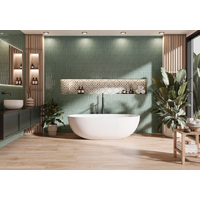

A practical guide to choosing decorative tiles for bathrooms, kitchens and feature areas. Learn how to choose, place and coordinate decorative tiles, including advice on colour, pattern, grout and suitable applications.
Decorative tiles are the details that give a room its personality. Through colour, pattern, shape, texture or finish, they can turn a practical surface into a considered design feature. The key is not simply choosing a tile you love—it is choosing one that works with the room, the surrounding surfaces and the way the space will be used.
This guide will help you decide where to use decorative tiles, how much visual impact to create, what to coordinate them with and what to check before ordering.
What is a decorative tile?
A decorative tile is any tile selected primarily to add visual interest. It may feature a printed pattern, an unusual shape, a rich glaze, a metallic finish, natural variation or a distinctive texture. Decorative tiles include patterned tiles, hexagon tiles, fan-shaped tiles, kit-kat and finger mosaics and metallic tiles.
They can be bold or understated. A strong geometric pattern creates an obvious focal point, while a softly glazed finger mosaic may introduce texture without dominating the room.
Where can decorative tiles be used?
Decorative tiles are particularly effective when they define a clear area rather than competing across several surfaces. Depending on the tile's technical suitability, consider using them:
- Behind a bathroom vanity
- On a shower or bath feature wall
- Inside a shower niche
- Across a kitchen or laundry splashback
- On a powder-room or bathroom floor
- On the face of a kitchen island
- Around a fireplace
- As a border or transition between surfaces
Always confirm whether the individual tile is suitable for walls, floors, wet areas or external applications before ordering.
Create more impact with fewer square metres
A decorative tile does not need to cover an entire room. Concentrating it in a smaller focal area can make the design feel more intentional while helping you manage the overall tile budget.
For example, you might use a patterned tile on a powder-room floor, a finger mosaic behind the vanity or a richly glazed tile inside a shower niche. The surrounding walls and floors can then use quieter, budget-conscious tiles that support the feature rather than compete with it.
This is the MDC Feature Tile Effect: selecting the areas that deserve attention and using contrast, texture or pattern where it will have the greatest influence on the room.
How to choose the right decorative tile
1. Start with the feeling you want to create
Before focusing on a particular product, think about the atmosphere you want in the room. Soft curves, warm neutrals and gently varied glazes feel relaxed and organic. Crisp geometry and strong contrast create a more structured look. Deep colour or metallic detail can add drama in a small feature area.
2. Choose one clear focal point
When several tiles compete for attention, the room can feel unsettled. Decide which surface should be the hero, then allow the remaining tiles, cabinetry and fittings to support it. In a bathroom, this may be the vanity wall, shower wall or floor. In a kitchen, it is usually the splashback.
3. Consider the scale of the pattern
Small mosaics and intricate patterns suit compact areas such as niches and splashbacks. Larger repeating patterns need enough uninterrupted space for the design to be appreciated. Check how the pattern joins across multiple tiles and account for any cuts around corners, taps, power points or cabinetry.
4. Coordinate rather than match
Your decorative tile and main tile do not need to be exactly the same colour. A more natural result often comes from a shared undertone, complementary texture or repeated material. A warm patterned tile might sit comfortably with an ivory stone-look tile, while a blue glazed feature tile may be balanced by a soft grey or off-white base.
5. View samples with the other finishes
Tile colours change under different lighting and beside other materials. Compare your shortlisted tile with the benchtop, cabinetry, paint, tapware and main floor tile. If possible, view everything together in both natural and artificial light before making the final decision.
Choosing decorative tiles for a bathroom
Bathrooms contain several surfaces in a relatively small area, so visual hierarchy matters. Start with the main floor and wall tile, then choose one decorative tile that gives the room its character.
In a small bathroom, keeping the main surfaces consistent can make the room feel calmer and more connected. The decorative tile can then highlight a vanity, niche or shower zone. If the floor carries a strong pattern, keep the walls quieter. If the feature wall has pronounced colour or texture, a simpler floor will usually provide better balance.
Make sure floor tiles have an appropriate finish for the intended wet area and confirm installation requirements with your tiler.
Choosing decorative tiles for a kitchen splashback
A kitchen splashback sits between several permanent finishes, including cabinetry, benchtops, flooring and appliances. Choose a decorative tile that connects with these elements without needing to match all of them.
Consider how easy the surface will be to clean, how many grout joints the layout creates and whether the material requires sealing. Lay the tile out against your benchtop and cabinetry samples, and check how the design will finish beneath overhead cupboards and around windows or power points.
How grout changes the finished look
Grout is part of the design, particularly with mosaics and shaped tiles. A contrasting grout outlines every piece and makes the pattern more noticeable. A closely matched grout softens the grid and allows colour or texture to become the focus.
Because a small grout sample can look different across a complete wall, compare the options with the tile before installation. Also confirm that the grout is suitable for the tile material and the room's conditions.
What to check before ordering
- Application: Confirm whether the tile is suitable for the intended wall, floor, wet-area or external use.
- Quantity: Allow for cuts, breakages, pattern matching and future repairs. Your required wastage allowance will depend on the tile and layout.
- Batching: Order the complete quantity together, as shade and calibre can vary between production batches.
- Layout: Ask your tiler to dry-lay patterned or shaped tiles and agree on starting points before installation.
- Sealing: Check whether natural stone, encaustic-style or other porous materials require sealing.
- Grout and adhesive: Use products suited to the tile material, substrate and installation area.
Frequently asked questions
Do decorative tiles make a small room look busy?
Not when they are used thoughtfully. Restricting the pattern or texture to one defined area and pairing it with quieter surrounding tiles can add personality while keeping the room balanced.
Can decorative tiles be used on bathroom floors?
Some can, but others are intended only for walls. Check the product's application and relevant slip-resistance information before choosing it for a bathroom floor.
Can I use decorative tiles in a shower?
Many decorative tiles are suitable for shower walls or niches, but suitability depends on the material, finish and manufacturer guidance. Confirm this before purchase, particularly for floors and continuously wet areas.
How do I calculate how many decorative tiles I need?
Measure the width and height of the area, calculate the total square metres and add an allowance for cuts, pattern matching and wastage. Complex layouts and strong repeats may require a larger allowance.
Should the grout match the tile?
It depends on the desired result. Matching grout creates a quieter surface, while contrasting grout emphasises the tile's shape and pattern.
Can MDC Tiles help coordinate my complete tile scheme?
Yes. Bring your plans, cabinetry and benchtop samples, colour selections and inspiration images to our Miranda showroom. Our tile and surface design specialists can help you coordinate the decorative tile with your main wall tiles, floor tiles, grout and surrounding finishes.
See decorative tiles in person
Colour, finish and texture are easier to understand when you can compare samples together. Visit the MDC Tiles showroom in Miranda with your plans and inspiration, and our team will help you develop a coordinated scheme for your room and budget.
Browse decorative tiles online or contact MDC Tiles to plan your showroom visit.